
Estimated Reading Time: 6 minutes
Table of Contents
- Why Wipes Don’t Break Down Like Toilet Paper
- What Happens Inside Your Plumbing System
- The Hidden Costs of Flushing Wipes
- Why This Problem Is Worse in Some Homes
- What You Should Flush Instead
- When It’s Time to Call for Help
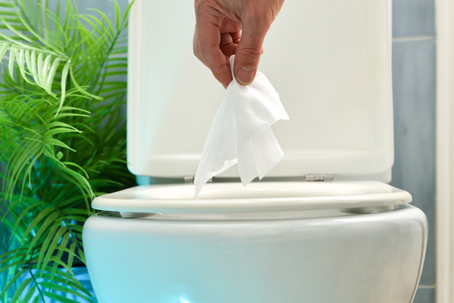
“Flushable” sounds reassuring. It suggests convenience without consequences. Toss it in, flush, and move on.
The problem is that the term “flushable” is not as strict or regulated as most homeowners assume. Many wipes are technically able to go down the toilet, but that does not mean they break down safely once they get there.
Toilet paper is designed to disintegrate quickly in water. Most wipes are not. Even when labeled as flushable, they often stay intact long after they leave your bathroom. That difference matters more than it seems.
Why Wipes Don’t Break Down Like Toilet Paper
Toilet paper is made to fall apart with minimal agitation. It starts breaking down almost immediately after flushing.
Wipes are built differently. They are designed to be durable, moist, and strong enough to hold together during use. That same durability is what causes problems in your plumbing system.
Instead of dissolving, wipes tend to:
- Hold their shape as they travel through pipes
- Catch on rough edges, bends, or buildup inside plumbing
- Combine with grease, hair, and debris to form clogs
Even a few wipes can begin to create resistance in your pipes. Over time, that buildup becomes harder to ignore.
What Happens Inside Your Plumbing System
When a wipe is flushed, it does not simply disappear. It moves through your pipes until it finds a place to slow down or get stuck.
This often happens in:
- Pipe joints or bends
- Older or narrower plumbing lines
- Areas where debris has already started to collect
Once a wipe gets caught, it acts like a net. Other materials begin to stick to it, and the blockage grows. Water flow becomes restricted, which can lead to slow drains, backups, or even overflows.
In more serious cases, wipes can travel beyond your home and contribute to larger sewer blockages, sometimes called “fatbergs,” which are difficult and expensive to remove.
The Hidden Costs of Flushing Wipes
At first, the impact may seem small. A slightly slower flush or a drain that takes longer than usual.
Over time, the costs can add up:
- Repeated clogs that require professional clearing
- Increased strain on your plumbing system
- Sewer line backups that affect multiple fixtures
- Potential water damage from overflows
What starts as a convenience can turn into a recurring problem that affects your entire home.
Why This Problem Is Worse in Some Homes
Not all plumbing systems respond the same way. Some homes are more vulnerable to issues caused by wipes.
This is especially true if your home has:
- Older pipes with buildup or corrosion
- Long or complex sewer lines
- Hard water, which can leave mineral deposits inside pipes
- A history of slow drains or recurring clogs
In areas like El Paso County and Douglas County, mineral-heavy water can gradually narrow pipes over time. When wipes are added into the mix, blockages can form more quickly and become harder to clear.
What You Should Flush Instead
A good rule to follow is simple: only flush toilet paper and human waste.
Everything else should go in the trash, including:
- Baby wipes
- Cleaning wipes
- Paper towels
- Feminine hygiene products
- “Flushable” wipes of any kind
Even products marketed as safe for flushing can behave differently once they enter your plumbing system.
When It’s Time to Call for Help
If your toilet has been clogging more often, draining slowly, or making unusual sounds, it may be time to have your plumbing checked. Recurring issues can point to buildup deeper in your system that simple plunging will not fix. Addressing the problem early can help prevent larger repairs down the line.
At Awesome Home Services, we help homeowners identify the cause of persistent toilet and drain issues and recommend practical solutions. Whether it involves clearing a blockage or upgrading to a new toilet, our team focuses on getting your system back to reliable performance.
Call (719) 800-7121 or reach out online to schedule a visit and take the next step toward a smoother, worry-free plumbing system. You can also take a moment to read through our customer reviewsto see what others have shared about their experience.
