
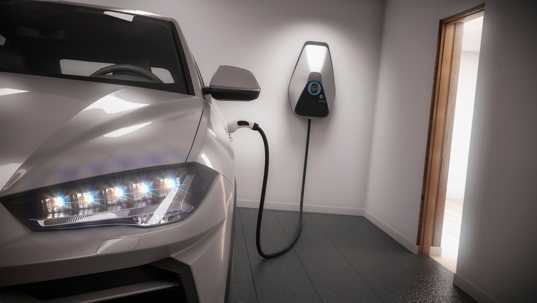
Colorado Springs homes carry their history in the walls. Post-war 1950s bungalows in Old Colorado City still have original knob-and-tube wiring. Ranch-style homes in Briargate are running EV chargers off panels that were sized for a 1970s appliance load. New construction in Flying Horse is already stacking up high-draw devices on circuits that are technically correct but practically tight.
The houses are different. The problem we see is the same: the electrical system underneath a home has not kept up with how people live in it now.
At Awesome Home Services, our team runs calls across El Paso, Pueblo, and Douglas counties every week. What follows are the real-world patterns we’re seeing from thousands of local electrical jobs and what we are being asked to fix.
If your home has not had an electrical inspection in several years, contact us at (719) 800-7121 to schedule a health check before making any additions to your system.
The 5 Electrical Safety Issues Showing Up Most in Colorado Homes
Colorado's high-altitude climate, older housing stock, and rapid population growth create a specific set of conditions that stress residential electrical systems. These are the problems our team encounters most.
1. Hidden Wiring Hazards Are the Leading Safety Concern
The calls we respond to more than any other deal with exposed wires, arcing, and buzzing sounds near outlets or panels. Nearly 800 calls have involved one or more of these conditions.
Usually, the problem is not a broken device. It is often a loose connection behind the outlet, a wire spliced without a permit and left unsecured, or insulation that has dried out over many years. A loose connection can spark intermittently for months before causing a fire. You might not hear or feel it.
Watch for these:
- Buzzing or crackling near outlets or switches. That sound is arcing. It means electricity is jumping across a loose or corroded connection. We find the source, whether it is the device, the box, or the wire, and fix it before it becomes a bigger problem.
- Outlets or switch plates that feel warm. Heat at a connection point means current is encountering resistance where it shouldn't. That is not normal and it is not something to sit on.
- Flickering lights that are not tied to a specific bulb. If it is happening across a room or a circuit, the bulb is not the problem. A loose wire in the circuit path is.
When we get these calls, we check the entire circuit, inspect the box, and determine whether the problem is part of a larger issue. In older homes around Colorado Springs, Black Forest, Cimarron Hills, and Fountain, connections often loosen due to temperature fluctuations. They were installed properly, but they are not as tight as they used to be.
2. Circuit Overloads Are Tripping More Breakers Than Ever
Treadmills, space heaters, window AC units, or portable induction cooktops each draw 12 to 15 amps on their own. A standard 15-amp circuit running a mix of these has no room to spare. When the draw exceeds the rated capacity, the breaker trips. Repeatedly resetting it stresses the breaker itself. Over 300 of our service calls have involved breakers constantly tripping.
The solution is not to install a larger breaker on the same wire, as that can cause fires. Instead, the right fix is to add a dedicated circuit that matches the appliance’s requirements.
When we check these issues, we look at how much power the appliance uses at its highest setting, whether the wiring can support a dedicated circuit, and whether the panel has space for a new breaker. In older homes, upgrading a circuit can reveal panel problems that need to be fixed first. It is better to find out before you buy the appliance.
Newer neighborhoods in Monument and Castle Rock typically have fewer problems than those closer to downtown, but the rise in high-power devices is affecting homes of all ages.
3. Smoke Alarms Fail More Quietly Than You Would Expect
You might not realize your smoke alarm has stopped working until a contractor or inspector points it out. The alarm looks normal and still chirps when the battery is low. However, after 10 years, the sensing chamber wears out, and the alarm will no longer detect smoke properly. In one year, we went on over 130 calls because smoke alarms were either non-functional or needed urgent replacement.
In Colorado Springs, the key standard that matters is a hardwired, interconnected smoke alarm system. When one alarm sounds, they all do. In a two-story home, this is a key safety feature.
If your home still uses battery-only alarms, it is advisable to have them reviewed soon. We check your current system, identify any outdated alarms, and install hardwired, interconnected alarms that meet Colorado’s current code.
4. GFCI Outlets in Wet Areas Are a Frequent Gap
GFCI outlets are required in kitchens, bathrooms, garages, and outdoor areas. They cut power within milliseconds if they detect a ground fault. GFCIs wear out, and a failed one looks just like a working one on the outside. So it’s a good idea to test it and make sure it’s functioning properly.
You can test your GFCI outlet in about 10 seconds. Press the "Test" button. The "Reset" button should pop out. If it does not, or if pressing "Reset" does not restore power, the outlet has failed.
Kitchen outlets near the sink wear out first because they are heavily used and exposed to moisture. Bathroom outlets are often wired in a row, so if the first GFCI fails, all outlets downstream lose protection without any clear warning. Garage and outdoor outlets experience greater temperature swings than the rest of the house, which wears them out faster.
Test your GFCI outlets. If they do not work properly, give us a call.
5. Partial Power Loss Is a Diagnostic Problem, Not Just an Inconvenience
Sometimes, certain circuits lose power while others still work. Lights may behave oddly in just one area of the house. This is not always just a breaker problem.
When we see this, we consider three main causes. It could be a failing main breaker, with one side weak and affecting only certain circuits. It might be a loose or failing neutral wire at the service entrance or panel, which can cause voltage swings and damage electronics.
Or the problem could be on the utility’s side, before the meter, and we cannot fix it. Xcel Energy and Black Hills Energy serve Colorado Springs, and we help you determine whether the issue is inside your home or with the utility before you pay for repairs that will not help.
Do not rely on resetting the breaker as a long-term solution to partial power loss. Let us check the problem first.
The 5 Modern Upgrades Colorado Homeowners Are Requesting Most
Electrical safety is always the top priority. Once your system is safe, consider the following upgrades, which we most often see in Colorado Springs, Pueblo, and nearby areas.
1. Lighting and Ventilation Upgrades
The most popular electrical upgrades we see are lighting and ventilation, with over 150 requests in a year for ceiling fans, exhaust fans, and LED fixture replacements. The reasons for these upgrades vary.
Residents of older neighborhoods want to refresh their homes without a full remodel. Newer homes often need improved bathroom fans. Old fluorescent lights are being replaced with LED systems that use less energy and run cooler.
We handle everything, from installing ceiling fans, including adding support if the box is not rated for a fan, to upgrading exhaust fans that vent to the outside. This is especially important in Colorado winters, when homes are sealed tight and moisture can build up.
We also convert recessed, track, and surface-mount fixtures to LED.
2. Dedicated 220V Circuits for Heavy Appliances
Electric dryers, ranges, and heavy shop equipment each require a dedicated circuit. In one year, over 110 of our customers upgraded to dedicated 220v lines for heavy appliances. These are not plug-in swap jobs. They require running the correct gauge wire from the panel to the appliance location, installing the appropriate breaker, and confirming the panel has capacity before any work begins.
We start by checking whether your panel can handle additional load. If a 100-amp panel is already full, it must be upgraded before adding a new 240-volt range. We determine the appropriate wire size and length, verify the outlet type—since electric ranges and dryers use different setups and older homes may have the wrong one—and plan the work so your appliance runs at full power from the start.
3. Panel Upgrades Are the Foundation for Everything Else
Panels in homes built from the 1950s to the 1980s were designed for the electrical needs of that era. They were not built for heat pumps, EV chargers, or homes with mostly electric appliances. Today, 60 or 100 amps is insufficient. Requests to upgrade to 150-amp or 200-amp service are consistent across all of the communities our team serves.
Upgrading your panel is not just about adding more capacity. It also means bringing it up to current safety standards, replacing old breakers, and making sure you have room for future upgrades.
We calculate your home’s current and future electrical needs before determining the panel size. We handle permits and final inspections because panel upgrades in Colorado Springs require them. We also work directly with Xcel or Black Hills to remove the meter and upgrade the service-entrance wiring.
4. EV Charger Installation Is Growing Fast
Requests for Level 2 EV charger installations have grown sharply across Colorado Springs and the surrounding area, driven by the increasing number of households with one or more electric vehicles.
A Level 2 charger, 240 volts at 32 to 48 amps, charges most EVs six to eight times faster than a standard 120-volt outlet. If you drive 30 or more miles a day, the difference is waking up to a fully charged battery instead of a partially charged one.
We are a Tesla Energy Certified Installer, and our electricians are also certified by ChargePoint, Span, and other major platforms. We install chargers for all brands and models.
We begin every installation by identifying the optimal charger location, determining the distance to the panel, and confirming whether the panel can support a new circuit. Many homes require panel upgrades before adding an EV charger. We plan the steps in the correct order, handle the required permits and inspections for the area, and manage the job from start to finish.
5. Backup Generators for Colorado's Unpredictable Weather
Colorado weather can be unpredictable. There are spring snowstorms in May, summer thunderstorms, and sometimes ice storms near Pikes Peak that knock out power for hours or longer. Many people want whole-home backup generators because they know how tough a prolonged outage can be.
We install Kohler generators and other backup power systems, sized for critical loads or whole-home coverage, depending on your needs.
The first step is choosing the right size. A generator for the basics—like the fridge, furnace, and some lights—is much smaller and cheaper than a whole-home system, and it is usually enough for most families. We help you figure out what you need before making any recommendations.
We install an automatic transfer switch that disconnects your home from the grid as soon as the power goes out, keeping utility workers safe and automatically switching you to backup power. We also explain your fuel options, like natural gas, propane, or diesel, since each has different supply and storage needs depending on your location.
Start with an Electrical Health Check
Upgrades work best when your electrical system is ready for them. If you install an EV charger on a faulty neutral wire, it will not function properly. Upgrading a panel in a home with hidden wiring problems may resolve the capacity issue but still leave safety risks.
An electrical health check is a thorough inspection of your panel, service entrance, visible wiring, outlets, and smoke alarms. It shows what your home has, what needs repair, and what is ready for an upgrade.
Schedule an appointment with Awesome Home Services by calling (719) 800-7121 or reaching out online. We serve homeowners in Colorado Springs, Pueblo, Monument, Castle Rock, and the surrounding communities.
