
Estimated Reading Time: 7 minutes
- Why Colorado Springs Water Is Among the Hardest in the Region
- How Hard Water Damages Pipes, Water Heaters, Appliances, & Plumbing Systems Over Time
- The Cost of Ignoring Hard Water vs. Treating It
- How Water Treatment Saves Money Long-Term
- A Smarter Way to Handle Hard Water in Colorado Springs
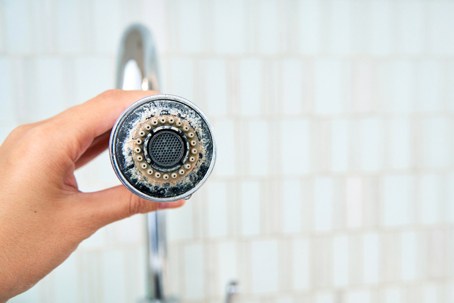
Take a look at the faucets in your kitchen or bathroom. If you see a white, chalky crust around the base, the aerator, or the handles, that is not dirt. It is mineral residue left behind by your water. In Colorado Springs, it’s a common sight.
Hard water is part of everyday life here. It is safe to drink, shower in, and use around the house, so it is easy to assume it is not a big deal. But “safe” and “harmless to your plumbing” are two different things. The minerals in hard water leave buildup behind every time water moves through your home, and that buildup slowly affects the parts of your plumbing system.
The tricky part is that hard water damage builds up over time. A little scale inside a pipe. A little sediment in the water heater. A little extra wear on the dishwasher. Over time, those small problems stack up into lower efficiency, more maintenance, more repairs, and shorter equipment life.
The good news is that hard water problems are manageable once you know what is happening. Understanding why local water is so hard, what it does to your plumbing, and how treatment can save money long-term makes it much easier to decide what to do next.
Why Colorado Springs Water Is Among the Hardest in the Region
Colorado Springs-area water gets its hardness naturally. Much of our water supply comes from groundwater sources associated with the Widefield aquifer. That groundwater has spent a long time underground, which gives it plenty of opportunity to absorb minerals. As water moves through the ground, it comes into contact with rock and soil, picking up dissolved calcium and magnesium along the way.
Once hard water enters a plumbing system, the minerals begin to leave buildup behind in the places that matter most. You may notice crusty residue around faucets or showerheads, but the bigger concern is what is happening out of sight. Over time, scale forms inside pipes, around fixture components, and along the bottom of a water heater tank.
How Hard Water Damages Pipes, Water Heaters, Appliances, & Plumbing Systems Over Time
Hard water damage usually begins with scale. Scale is the mineral buildup left behind when water is heated, evaporates, or sits inside plumbing equipment.
Water heaters lose efficiency faster
A tank water heater creates ideal conditions for scale because it stores hot water constantly. As minerals settle out, they collect along the bottom of the tank and around heating components. That buildup makes the unit work harder to heat water, which can raise energy use and add strain over time.
Boilers burn more fuel as scale builds up.
In boiler systems, hard water can leave scale on heat transfer surfaces, which makes it harder for the system to heat water efficiently. Even a small amount of buildup can make a difference. Removing just a 1/32-inch deposit can decrease fuel use by 2%, and removing a 1/8-inch deposit can decrease fuel use by more than 8%, according to the U.S. Department of Energy.
Pipes can slowly narrow from the inside
Mineral deposits also collect inside pipes. In older homes, especially those with older metal piping, that buildup can gradually reduce the interior diameter of the pipe, making it narrower. Over time, that can lead to lower water pressure.
Fixtures show the problem early
Showerheads and faucet aerators are often the first places where hard water becomes noticeable. Small openings collect mineral residue quickly, which affects flow and spray patterns. You may notice crusty white or yellowish buildup, clogged aerators, or showerheads that no longer spray evenly.
Appliances wear down under constant mineral exposure
Dishwashers and washing machines deal with hard water every time they run. As scale forms on internal components, those systems have to work harder to do the same job. Over time, that can reduce efficiency, increase wear on parts, and contribute to more frequent performance issues. Hard water may also leave dishes spotted, glassware cloudy, and laundry feeling less clean than expected.
Everyday cleaning gets harder too
Hard water also affects how soap performs. Calcium and magnesium interfere with lathering, which can leave behind film on sinks, tubs, shower walls, dishes, and glassware. You can find yourself using more soap, more detergent, and more cleaning products just to get normal results.
The Cost of Ignoring Hard Water vs. Treating It
Ignoring hard water means paying for the effects over time. Mineral buildup does not stay in one place or cause just one problem. It gradually puts more strain on the plumbing system, reduces efficiency, and increases wear on the equipment.
These costs do not always arrive as one big repair bill. More often, they show up through:
- Higher energy bills
- More frequent maintenance
- Earlier appliance replacement
- Reduced performance from plumbing fixtures
- More wear on a water heater
- More time and money spent cleaning up mineral residue
Treating hard water, on the other hand, is usually much more predictable. Instead of waiting for scale to affect everything in the house, homeowners can address the source of the problem before it moves through the plumbing system. That means fewer surprise repairs, lower day-to-day wear, and less money spent fighting symptoms that keep coming back.
How Water Treatment Saves Money Long-Term
The most effective way to reduce hard water problems is usually a whole-home water softener. A softener treats the water as it enters the house, removing calcium and magnesium.
However, not every home needs the exact same setup. Some homeowners may benefit most from a whole-home softener. Others may also want broader filtration or a reverse osmosis unit at the kitchen tap, depending on their goals for drinking water.
If you’re not quite ready to install a system, there are still smart maintenance steps worth taking in the meantime. Annual water heater flushing helps remove sediment from the bottom of the tank. Cleaning faucet aerators and showerheads can restore flow when mineral buildup starts interfering with performance. Routine plumbing inspections can help identify whether hard water is beginning to affect visible fixtures, appliances, or other parts of the system.
Still, maintenance alone does not stop the minerals from moving through the home. It helps manage the effects. Treatment addresses the cause. When less scale builds up inside the plumbing, equipment tends to last longer, run more efficiently, and need less intervention along the way.
A Smarter Way to Handle Hard Water in Colorado Springs
Hard water is one of those home issues that is easy to live with for a while because the damage is slow. But those small signs usually point to the same bigger issue: minerals are moving through the plumbing system and leaving deposits behind.
If you’re noticing scale build-up around your fixtures, then it may be time to get a closer look at what’s happening inside your system. The first step is understanding what is in your water. Awesome Home Services offers aComprehensive Water Quality Test to help homeowners get a clear, accurate picture of their water and choose the right next step for their home.
To get schedule your water quality test, reach out online or call (719) 800-7121.
