
Estimated reading time: 4-5 minutes
If you've noticed white crust building up around your faucets, a film on your dishes after the dishwasher runs, or soap that doesn't lather as it should, you're dealing with hard water. The cause isn't your dishwasher or your soap. Dissolved calcium and magnesium in your water supply leave residue on every surface water touches, and the USGS has documented hard water conditions across much of the western United States.
If you live in Colorado, your water likely carries enough of those minerals to affect your appliances, fixtures, and pipes for years before the damage becomes obvious.
I'm Dean Christian, the Plumbing Manager at Awesome Home Services. I see what hard water does to water heaters, supply lines, and fixtures in our customers' homes on a regular basis. This blog covers what's happening inside your pipes, the different types of water softener systems, which ones require professional installation, and the honest tradeoffs involved in each.
To talk through water softener options for your home, call (719) 800-7121 or contact us online.
What Does Hard Water Do to Your Plumbing and Appliances?
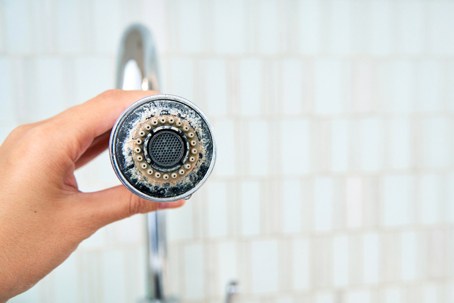
Hard water isn't a health hazard. What it does is leave dissolved minerals behind everywhere water flows through your home: inside pipes, on heating elements, inside your water heater's tank, around faucet aerators, and on your showerhead.
That buildup is called scale. Scale narrows the inside of supply lines, which gradually reduces water pressure across your home. Inside a water heater, scale coats the heating element, which means the heater works harder to bring water to temperature and costs more to run each month. Appliances that heat water, including dishwashers and washing machines, also run less efficiently and tend to fail earlier when hard water goes untreated.
None of this shows up as an emergency. The signs build gradually: a water heater running out of hot water faster than it used to, a showerhead needing cleaning more often, dishes with spots or residue after a full cycle.
Which Types of Water Softeners Are Available?
"Water softener" covers several different products, and they don't all work the same way. Here's what each type does and where it fits.
Salt-Based Ion Exchange Softeners
This is what most people mean when they say "water softener." The system connects to your main water line and routes water through a resin tank filled with sodium-charged beads. As water passes through, the beads swap calcium and magnesium ions for sodium ions. The water coming out of your taps no longer carries the minerals responsible for scale.
Salt-based systems require a brine tank, filled with sodium chloride or potassium chloride pellets on a regular schedule. The system runs periodic regeneration cycles to recharge the resin with salt. These are whole-home systems, not a faucet attachment, and they require a licensed plumber to install correctly. The installation involves your main water supply line, a drain line connection, and in most setups an electrical connection as well.
Salt-Free Conditioning Systems
Salt-free systems, also called TAC systems (template-assisted crystallization), don't remove minerals from the water. Instead, they change the structure of the calcium and magnesium particles so they don't bind to surfaces. The minerals pass through your pipes and fixtures without sticking.
These systems don't require electricity, don't produce wastewater, and don't add sodium to your water. That makes them a good fit if you're on a low-sodium diet or if your local water utility restricts brine discharge. Salt-free systems are whole-home installs, sized to your household's water flow rate, and should be installed by a licensed plumber.
Point-of-Use Filters
Point-of-use filters, the kind attached to a single faucet or installed under a kitchen sink, filter specific contaminants but don't soften water the way a whole-home system does. A filter on your kitchen tap won't stop scale from building up in your water heater or washing machine.
Where they make sense: if your concern is drinking water quality at one location and you're not dealing with the broader impact from hard water throughout your home, a point-of-use filter handles that narrower problem. Some homeowners use both: a whole-home softener for plumbing and appliances, and a separate filter for the kitchen tap.
Magnetic and Electronic Descalers
These devices attach to the outside of your water line and use magnetic or electronic fields to change how minerals behave in the water. They're the lowest-cost option and don't require a licensed plumber to install.
The research on magnetic and electronic descalers is mixed. Some homeowners report improvement; the lab data is inconsistent. If your hard water problems are mild and you want to try a low-risk option before committing to a whole-home system, a descaler is worth testing first. But if scale is already affecting your water heater or supply lines, a descaler won't be enough.
Which Systems Need a Licensed Plumber to Install?
Salt-based and salt-free whole-home systems both require a licensed plumber.
Sizing the system incorrectly means it won't condition water effectively or will cycle too frequently and wear out early. A licensed plumber calculates your household's grain capacity need based on water hardness and daily usage before recommending a unit size. That step alone prevents a lot of problems.
The installation also involves cutting into your main water supply line. A licensed plumber handles the bypass valve installation (which lets you shut off the softener for maintenance without cutting your water supply), the drain line connection for systems producing regeneration wastewater, and any electrical connections the unit requires.
Any installation in our service area needs to meet local plumbing code requirements. A licensed plumber pulls the right permits and makes sure the work passes inspection.
Point-of-use filters and magnetic descalers are appropriate for a confident DIYer. Whole-home systems are not. The cost of a failed installation, including potential water damage near your main supply line, runs higher than professional installation does upfront.
Is a Water Softener Worth the Investment?
A water softener makes sense for a lot of homes. It doesn't make sense for all of them.
What you get: Longer service life for your water heater, dishwasher, and washing machine. Less scale on fixtures and inside pipes. Soap and detergent lathering and rinsing more effectively. Dishes and glassware coming out of the cycle clean rather than spotted.
What to account for: Salt-based systems add a small amount of sodium to your water. If you're on a sodium-restricted diet, a salt-free system or a point-of-use drinking water filter addresses that concern. Whole-home systems cost more upfront than faucet filters or descalers, and you won't see the return right away. It shows up later in appliance repair bills that don't happen and equipment that lasts longer than it would have otherwise. Salt-based systems also need brine tank refills every couple of months. If the regeneration cycle stops working correctly, that's a service call.
If your water heater is already running shorter cycles or your faucet aerators need clearing regularly, the cost of waiting is already accumulating.
If you want to know where your water stands, Awesome Home Services does water testing in Colorado Springs and the surrounding area. We start with a hardness test, then size the system to your household's actual usage before recommending anything. Our licensed plumbers handle the permit process for whole-home installs.
Written by: Dean Christian, Plumbing Manager
 Dean Christian serves as the Plumbing Operations Manager at Awesome Home Services, bringing more than 12 years of hands-on residential plumbing experience to the team. Having worked across three different states, Dean brings a broad perspective and deep understanding of what it takes to deliver reliable, high-quality plumbing service in a wide range of homes and situations.
