Estimated reading time: 4-5 minutes
Your garage door works reliably: it opens, it closes, repeat. But the math behind this simple process is easy to overlook. A door used four times a day completes around 1,400 open-and-close cycles a year. The springs that make the cycle smooth are rated for 10,000 cycles, which equates to a 7-year lifespan, assuming ideal conditions.
I’m Cedric H., the Garage Door Operations Manager at Awesome Home Services. I’ve worked on garage door systems in Colorado Springs homes long enough to know that most component failures are preceded by signs. In this blog, I’ll cover what each major garage door component is rated for, what shortens that lifespan in our climate, and what to watch for before you’re dealing with a garage door that won’t open.
If you need a garage door tune-up or service, call (719) 800-7121 or contact us online.
Springs Set the Clock on Your Entire System
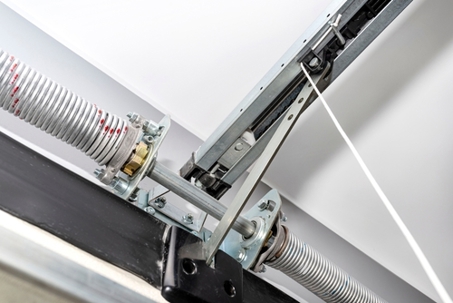
The torsion spring above your garage door stores energy as the door closes and releases it when the door opens. Every cycle counts against its rated lifespan. Standard springs are built for about 10,000 cycles, which works out to about seven years if the door is used four times a day.
Some spring options have longer lifespans. High-cycle springs have ratings from 25,000 to 100,000 cycles. Although these components have a higher upfront cost than standard springs, the replacement intervals are much longer.
It’s worth noting that your garage door has two types of springs, which work and fail differently. Torsion springs mount horizontally above the door. Extension springs run along the sides of the track.
Torsion springs tend to last longer than extension springs, and they fail in a more controlled way. Extension springs snap under load and travel, creating a safety risk.
The Impact of Colorado Weather on Garage Door Springs
In Colorado, single-digit overnight temperatures in winter can be followed by afternoons in the 50s or 60s. That temperature swing affects metal. Springs contract in cold air and expand in warm. A spring exposed to wide temperature swings accumulates fatigue faster than one operating in a stable, moderate climate.
Colorado’s dry climate and low humidity work in your favor in the spring. Springs and cables don’t develop rust the way they would in coastal areas. That said, if your garage is near an irrigation system or there’s a lot of condensation due to temperature swings, rust can develop. Because of this, make sure your garage is well-ventilated.
It’s also a good idea to make sure your garage is insulated. While insulation doesn’t eliminate the temperature swing, it can moderate it. Keeping the temperature in your garage stable can positively affect the lifespan of springs.
Cables Don’t Have a Cycle Rating, but They’re Still Finite
Galvanized steel cables work alongside your springs to lift the door evenly. The gables don’t have a cycle rating, but they have a typical service range. They last about 8 to 15 years, depending on how often the door is used and the conditions in the garage.
A failed cable causes the garage door to drop on the side where it snapped. A door that falls unevenly can cause serious injury or property damage. Thus, catching early warning signs of cable failure matters.
When the door is closed, examine the cables for:
- Individual wires that are separating or fraying
- Kinks that indicate that the cable is stressed beyond the normal range
- Surface rust
- Slack in the cable
Any of the above conditions suggests that the cable needs attention from a garage door technician.
The Lifespan of Rollers
Rollers guide the door along the track on each side. These rollers may be made of nylon or steel. Nylon rollers last 10 to 15 years. They run quietly and generate less friction against the track. If you use your door multiple times a day, consider using nylon cables instead of steel.
Steel rollers last about 10 years or more. However, they are louder and create more friction than nylon. They can also cause more wear on the track.
You can check the status of your rollers by looking at them while the door is closed and stationary. The wheel should be round and intact.
The roller needs to be replaced if you see any of the following:
- Flat spots
- Cracking
- Chips on the surface
A worn roller will cause your door to make grinding or popping sounds.
Maintenance to Keep Garage Door Components Working Right
While garage door components have finite lifespans, maintenance helps extend that lifespan.
Do the following regularly:
- Lubricate the springs, hinges, and rollers with silicone spray or white lithium grease. Avoid WD-40, as it’s not a long-term lubricant for moving components under load.
- Test the balance once a year. Disconnect the opener and lift the door manually to about waist height, then let go. If your door is properly balanced, it’ll hold position. If it drops or climbs down, the spring tension is off, and you’ll need a technician to come out and service it.
- Keep tracks clean. You don’t need to lubricate the tracks, but it’s a good idea to wipe them down to remove dirt and debris.
- Address strange noises early. Grinding, squeaking, and rattling indicate an issue with the garage door system. Catching problems that require only a minor service call is better than waiting until they get bigger and spread to other components.
Call Us for Service
The consequences of failing garage door components range from inconvenience to safety risks. If your springs, cables, or rollers are approaching or past their expected service life, professional service is recommended.
Awesome Home Services handles spring replacement, cable service, roller replacement, and garage door maintenance in Colorado Springs, Fountain, Pueblo, and the surrounding communities. Call (719) 800-7121 or contact us online for an assessment.
Written by: Cedric H., Garage Door Operations Manager

Cedric H. serves as the Garage Door Operations Manager at Awesome Home Services, bringing years of hands-on garage door experience to the team. He started as an installer and worked his way through technician, Field Manager, and Assistant General Manager roles before stepping into operations management, so he knows the work from the ground up. That background informs how he runs things today: tight processes, consistent results, and a team customers feel good about letting into their homes.
