
At Awesome Home Services, we've been in the electrical field for years, and the call we respect most is the one a homeowner makes when they're not sure whether they have a real emergency. Not because the situation isn't serious, but because they took the time to think it through rather than panic. That's the right instinct. Knowing the difference between an emergency and a problem that can wait until morning is one of the most useful things we can tell you before you ever pick up the phone.
This post covers two things: how to recognize a true electrical emergency, and the steps to take before we get there.
What Counts as an Electrical Emergency?
Not every electrical problem looks the same, and the difference between a fire risk and a nuisance repair is worth knowing before something goes wrong.
Situations That Require an Immediate Call
Some problems give you a window. These don't.
A burning smell or smoke coming from an outlet, wall, or your panel is a call-right-now situation. So is sparking or visible arcing from an outlet or breaker. One of the recent calls we got was a panel that caught fire; the homeowner cut the main power, and the utility company was already being contacted for a full shutdown. If you're in that situation, we need to be your next call after 911.
Other situations that qualify as electrical emergencies:
- A breaker that trips repeatedly and won't reset, even with nothing drawing from it
- Power out to part or all of your home with no utility-side explanation
- Outlets or switches that are hot to the touch
- Buzzing or humming from your electrical panel
- Lights flickering throughout the house, not just one fixture
If any of those describe what you're looking at right now, stop reading and call.
Situations That Feel Urgent but Can Wait Until Morning
Part of our job is telling you when you don't need emergency service. A single outlet that stopped working is almost always a tripped GFCI (that's the outlet with the reset button, usually in the bathroom, kitchen, or garage) rather than a panel issue. One breaker that tripped once and reset cleanly, a light fixture that went out, a ceiling fan that stopped working — those are repair calls, not emergencies.
We'll still get to you, but they don't need to pull someone at midnight.
Telling you that is not us turning down work. It's us being honest about what the problem actually is.
What to Do Before the Electrician Arrives
Before we pull up to your address, there are a few things you can do that make the situation safer and help us work faster when we get there.
Step 1: Locate and Identify the Problem Source
Don't touch it. Know where it is. If the issue is at the panel, stay away from it. What you can do is pay attention to the details: what you smelled, what you heard, what area of the home it's in, and what changed in the last day or two.
Every time we dispatch for an electrical emergency, we're already asking those questions before we arrive, because the answers shape what our electrician walks into. If there was arcing or burning, buzzing or humming, a specific circuit affected, or something new installed recently, all of that matters.
Step 2: Cut Power to the Affected Area If You Can Do It Safely
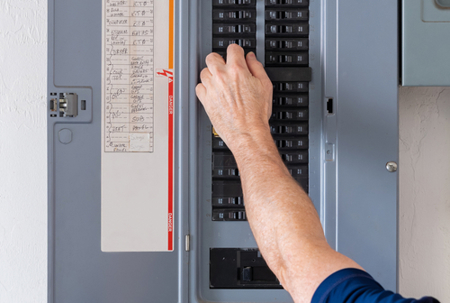
If the problem is isolated to one circuit and you can get to your breaker panel without going near the source of the issue, switch off that breaker.
If the panel itself is the problem, leave it alone entirely. Shutting off a circuit buys time. It does not fix anything, but it stops the situation from getting worse while you wait.
Step 3: Get Everyone Away from the Area
Kids, pets, anyone near the outlet, the wall, or the panel. This isn't overthinking it. Electrical problems can progress quickly, and you don't want anyone close to something you don't fully understand yet.
Step 4: Don't Use Water Near Any Electrical Problem
This is a common mistake. Water conducts electricity. If you smell smoke and your instinct is to grab a cup of water, don't. Leave the area and call us.
Step 5: If There's Smoke or Fire, Call 911 First
We are not the fire department. If you have active smoke or flame, 911 is the first call. We'll be right behind them.
What Happens When We Arrive
When our electrician shows up, you'll know what's happening before anything gets touched. That's not a policy; it's just how we work. We walk through what we found, give you the price before any work starts, and answer your questions. There are no surprises on the invoice.
Our vehicles are fully stocked for electrical service calls, which means most problems get resolved in a single visit. We don't schedule a first trip to diagnose and a second trip to fix. If we're there, we're there to finish it.
Why Electrical Emergencies in Colorado Springs Get Worse When You Wait
Colorado Springs homes span a wide range of ages, and the older the home, the more likely it is to have wiring not designed for today's electrical loads. Neighborhoods with housing stock from the 1950s through the 1980s, which we serve quite a few of across El Paso County, sometimes have Federal Pacific panels or older wiring that hasn't kept up with how the home is used now.
Add Colorado's temperature swings and the strain that places on equipment, and a small problem that gets ignored for a few days has more opportunity to become a larger one.
Waiting doesn't make electrical problems cheaper. It makes them harder to fix.
We Serve Colorado Springs and the Surrounding Area
Our electrical team responds across Colorado Springs, El Paso County, Pueblo County, and Douglas County. If you're dealing with an electrical emergency right now, call (719) 800-7121. We'll give you upfront pricing before any work begins and get someone to you in a fully stocked vehicle.
Awesome Home Services holds a BBB A+ rating and is a member of the Nexstar Network. We're here when it matters.
